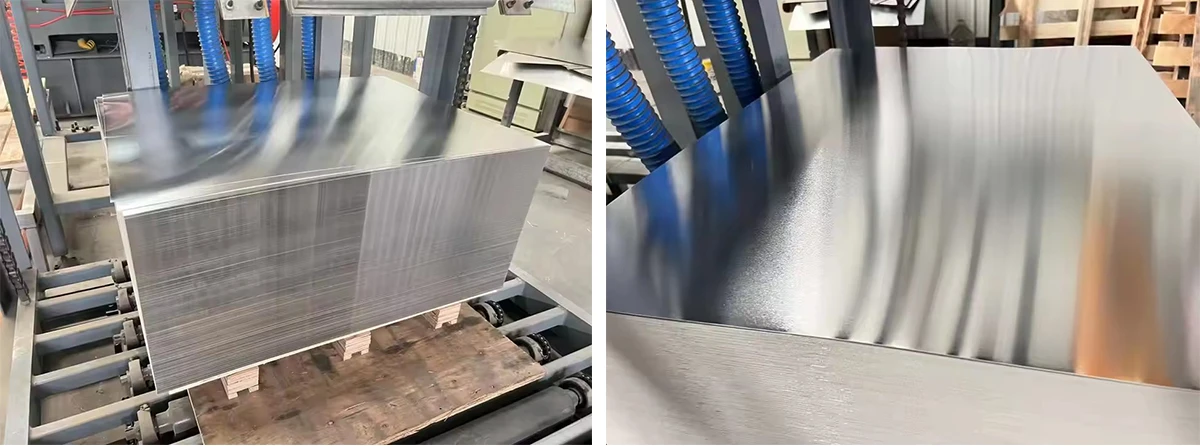
MR Grade Electrolytic Tinplate Sheet Production Process
MR grade electrolytic tinplate is a widely used low-carbon tinplate with excellent ductility and corrosion resistance, mainly applied in food cans, general packaging and daily metal containers. Its complete production process follows strict industrial standards, covering multiple core procedures from raw material preparation to finished product inspection.
The whole production starts with cold rolled steel substrate production. High-quality low-carbon hot rolled steel coils are selected as raw materials. After pickling to remove surface oxide scales, the steel strips go through multi-pass cold rolling to achieve the required thickness and flatness, forming cold rolled steel sheets with uniform mechanical properties that match MR grade requirements.
Next comes the electrolytic tinning process, the core step of tinplate production. The cleaned cold rolled sheets are sent into the electrolytic tinning bath. Under controlled current and temperature, pure tin is evenly deposited on both sides of the steel surface to form a dense tin coating. The coating weight is precisely adjusted according to usage demands to guarantee anti-rust performance.
Subsequently, post-treatment is carried out. The tinned sheets pass through melting treatment to fuse the tin layer tightly with the steel base, enhancing adhesion. Then passivation and oiling are conducted. Passivation improves surface stability and tarnish resistance, while a thin oil film prevents scratches and adhesion during storage and transportation.
Finally, the products go through slitting, shearing and strict quality inspection. Inspectors test tin coating weight, surface appearance, mechanical performance and corrosion resistance to ensure all indicators comply with MR grade standards. Qualified sheets are packaged and delivered, ready for downstream deep processing.