Food Grade Gold Lacquered Tinplate
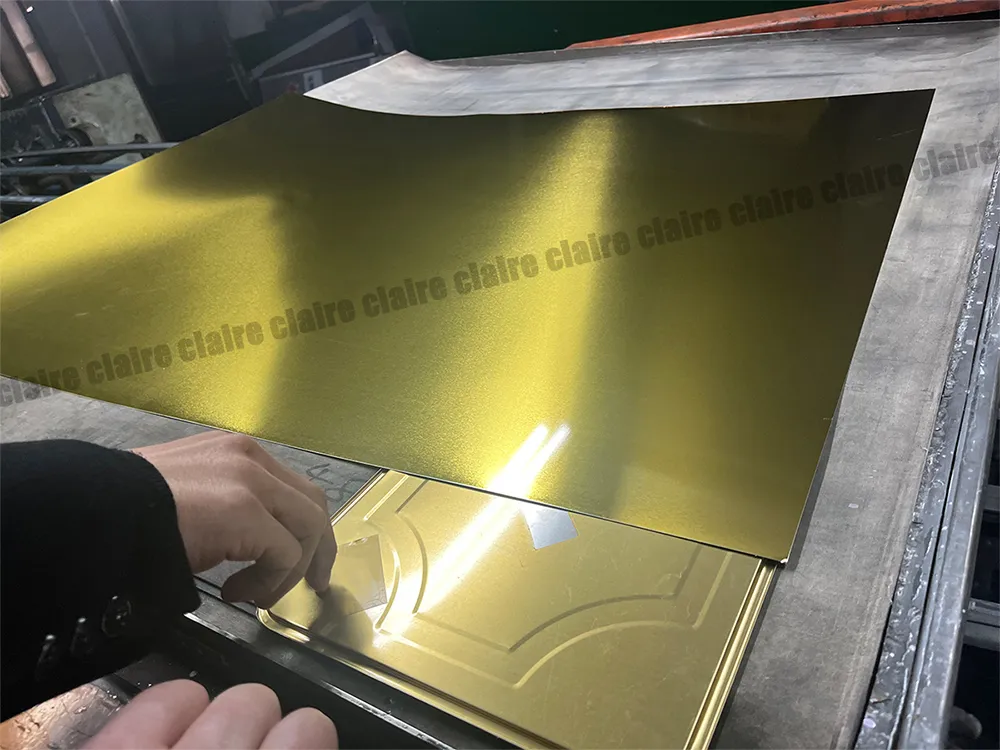
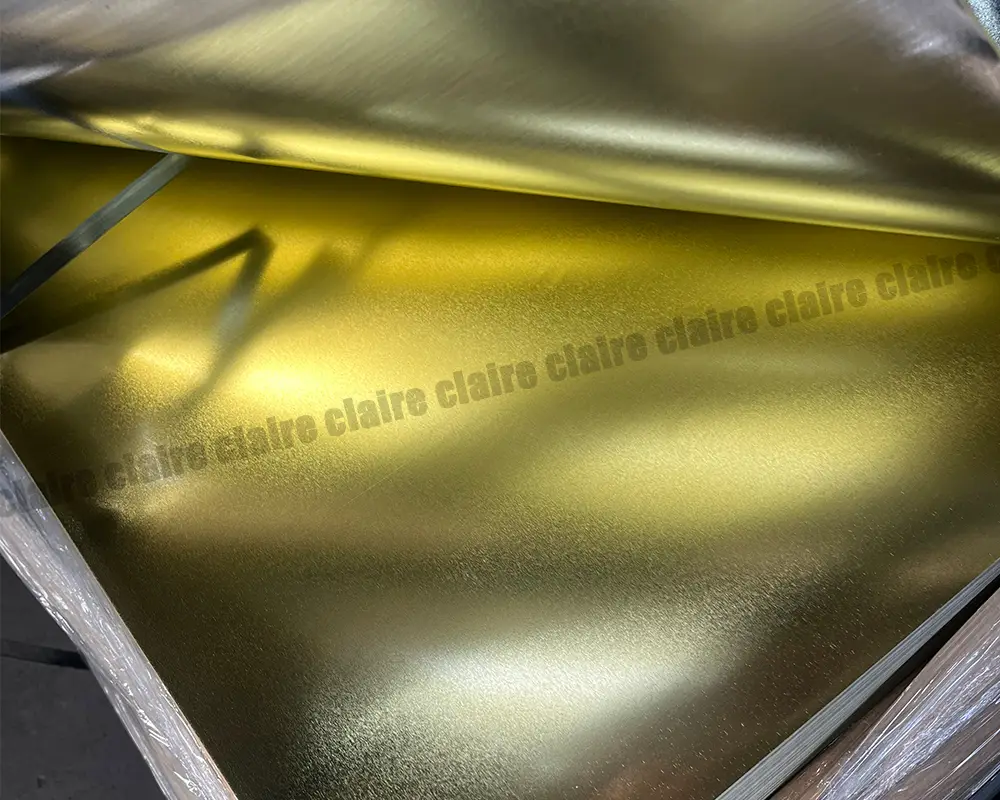
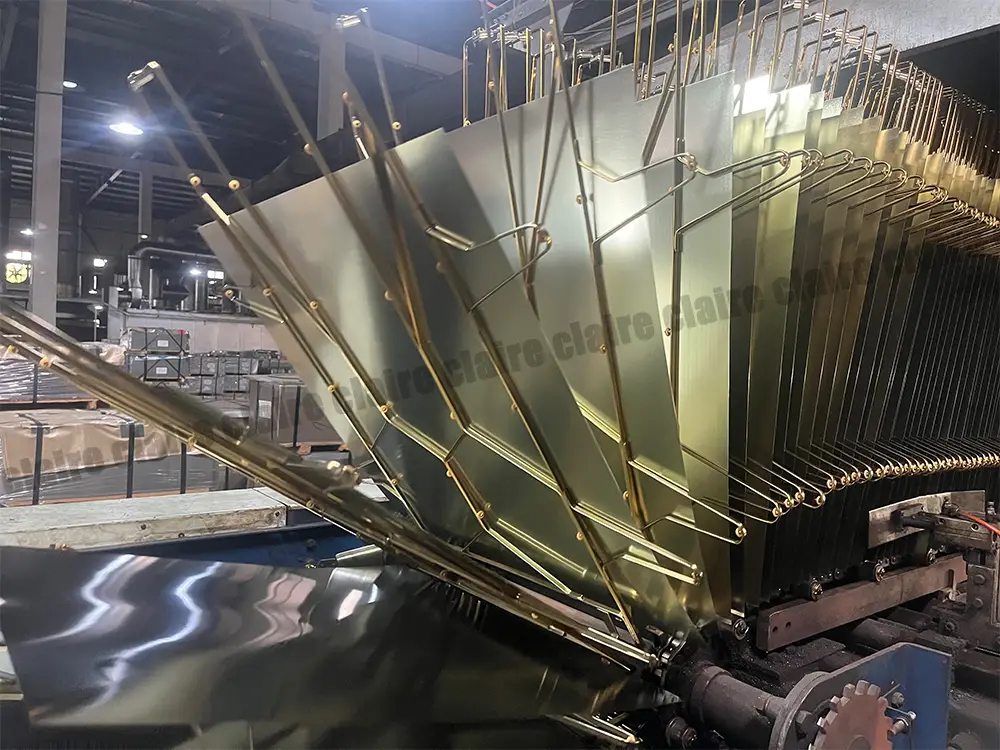
Food grade gold lacquered tinplate is a premium electrolytic tinplate (ETP) coated with food-safe golden lacquer, designed for food packaging requiring corrosion resistance, hygiene, and decorative appeal. Its production adheres to strict ISO, ASTM, and food contact standards, integrating metallurgy, surface treatment, and precision coating into a continuous, quality-controlled workflow.
1. Raw Material Selection & Preparation
The process starts with MR-grade or food-grade low-carbon steel coils (SPCC/MR), 0.115–0.5mm thick, selected for excellent formability and consistent mechanical properties. These coils undergo degreesing and pickling to remove surface oil, rust, and oxides, ensuring a clean, active substrate critical for tin adhesion. Precision leveling trims edges and eliminates defects, delivering uniform strips for tin plating.
2. Electrolytic Tin Plating & Reflow
Cleaned steel strips enter the electrolytic tin plating line, where a uniform tin layer (1.1–11.2 g/m²) is deposited via DC electrolysis. Post-plating, reflow treatment melts the tin layer, forming a lustrous tin-iron alloy that boosts corrosion resistance and surface smoothness. A passivation step follows to enhance lacquer adhesion and prevent oxidation.
3. Food Grade Gold Lacquer Coating
The core step—gold lacquer application—uses food-safe epoxy-phenolic gold lacquer, compliant with FDA and EU food contact regulations. High-speed roller coaters apply a 5–10 μm uniform layer to the tinplate’s inner (food-contact) surface, leaving a narrow uncoated strip for welding. The golden lacquer acts as a barrier, preventing metal-food reactions, corrosion, and contamination while delivering an attractive finish.
4. Curing & Post-Treatment
Coated strips move to temperature-controlled ovens (150–180°C) for 10–15 minutes to cure the lacquer, ensuring full hardness, adhesion, and resistance to high-temperature sterilization (121°C). After curing, the tinplate is cooled, electrostatically oiled for lubricity, and inspected for coating uniformity, pinholes, and color consistency.
5. Slitting, Cutting & Final Quality Control
Finished coils are slit to customer widths (600–1050mm) or cut into sheets (600–1200mm). Final inspections verify dimensional accuracy, surface quality, lacquer hardness, and food safety compliance, with samples tested for heavy metal leaching and corrosion resistance. Qualified products are packed with waterproof paper and steel strapping on pallets for global shipping.